Shredder knife bolts operate under vibration, impact and cyclic loads. Although they may look secondary, an incorrect fastener can compromise knife seating, make rotation or replacement difficult and damage the knife holder. The objective is not to apply “as much torque as possible”, but to generate the specified preload repeatably and retain it in service.
Why torque values cannot be copied from another machine
Applied torque is only partly converted into bolt tension and clamp force. Much of it is consumed by friction in the thread and under the head. The same value can therefore produce different preload when lubricant, coating, surface roughness, thread condition or tool changes.
Bossard explains that the friction factor depends on material, finish, coating and lubrication, among other variables. Its tables provide reference values and do not replace a joint calculation in accordance with VDI 2230. For shredder maintenance, the machine manual, exact bolt reference and procedure for the particular rotor version must take priority.
What preload is and why it matters
Preload is the tension created in a fastener during tightening; the reaction keeps the clamped parts compressed. Nord-Lock technical guidance notes that insufficient preload may allow slip or separation, while excessive preload can deform components or overstress the bolt.
In a knife assembly, cutting force should be transferred through the intended contact between the knife and its seat. The bolt maintains that contact, but it must not be used to compensate for dirt, burrs, uneven wear or incorrect geometry. If the knife does not seat fully, more torque does not correct the cause.
Checks before installation
Reference and geometry
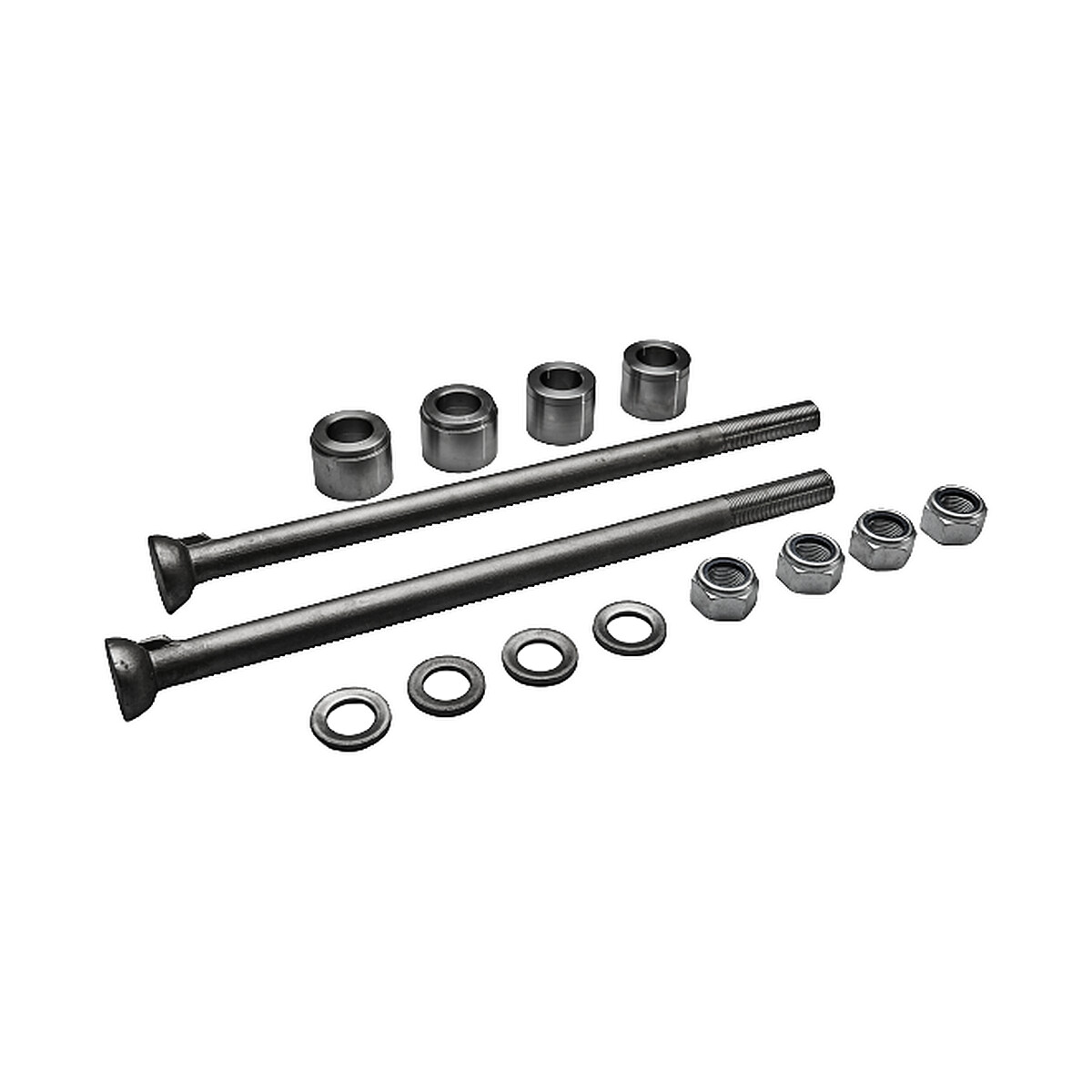
Confirm manufacturer, model, serial number and rotor variant. Record thread diameter and pitch, usable length, head style, drive, countersink angle, threaded length and any fitted shank. A fastener that screws in may still seat incorrectly or provide the wrong clamp length.
Property class and material
Head marking, mechanical property class and material are functional information. Never substitute a visually similar bolt. Fastener strength must also be compatible with the internal thread, seating face and allowable contact pressure of the knife.
Coating, lubrication and locking product
A change in zinc finish, black oxide, friction coating, oil or assembly paste can alter the torque/preload relationship. Do not add lubricant or thread-locking adhesive unless the manufacturer’s procedure requires it. Nord-Lock warns that adhesives may significantly affect the torque/load relationship; a contaminated thread or one containing cured product is not equivalent to a new thread.
Condition of the seat
Clean the seat, thread and head recess using the approved method. Check for chips, melted plastic, corrosion, dents or burrs. Inspect the knife holder and supporting surface: damage can tilt the knife and concentrate stress.
Recommended installation sequence
- Lock out the machine. Apply the energy isolation procedure and verify that the rotor cannot move.
- Identify the set. Compare knives, bolts and positions with the drawing or spare-parts list.
- Clean and inspect. Reject damaged threads, deformed drives, severe corrosion or visibly stretched components.
- Start by hand. The bolt should engage without force. Early resistance may indicate cross-threading, dirt or a wrong reference.
- Tighten progressively. Where several fasteners are used, follow the manufacturer’s sequence and stages so the knife seats evenly.
- Apply the specified value. Use a suitable calibrated torque wrench within its effective range. Record value, tool, operator and date when required by the quality plan.
- Check the assembly. Verify seating, cutting clearances and manual rotation in accordance with the manual before closing guards.
Loosening, settlement and vibration
Nord-Lock distinguishes preload loss through settlement from rotational self-loosening associated with shock, vibration or dynamic loading. A witness mark on the head may reveal rotation, but it does not measure preload or prove that the joint remains sound.
Repeated loose bolts require root-cause analysis: damaged seating, inadequate contact, damaged thread, wrong fastener, changed friction, unsuitable sequence, abnormal vibration or an incompatible knife. Routine retightening without diagnosis can conceal the problem.
Can knife bolts be reused?
There is no universal rule. Nord-Lock shows that reuse and changes in friction can alter the preload produced by the same torque. Follow the manufacturer’s limits and replace single-use, stretched, damaged, corroded or drive-deformed items. Where no documented criterion exists, the decision must account for downtime cost and the consequence of failure.
When rotating reversible knives, do not assume that existing fasteners remain suitable. WEIMA explains that certain rotors use recessed hexagonal knife bolts to reduce head wear and simplify removal. That specific arrangement does not make bolts interchangeable between different models.
Maintenance checklist
- Exact fastener, knife and position reference.
- Condition of thread, head, seat and drive tool.
- Dry, lubricated or locking-product condition as specified.
- Manufacturer’s torque, sequence and tightening method.
- Identified torque wrench with valid calibration.
- Cutting clearance and final manual rotation check.
- Record of incidents, operating hours and replacements.
Request compatible knives and fasteners
Sharp Industrial can assess compatible knives, holders and fasteners from a reference, drawing or sample. Compatible does not mean original: trademarks are used only to identify the application, and OEM origin is stated only when documented. Browse our spare parts, technical and sharpening services, or send us your machine data for a quotation.