When ordering a blade, it is common to only compare the HRC hardness. This value describes a property of the material, but does not summarize its entire response to abrasion, impacts or bending. A useful specification combines material, heat treatment, geometry and working conditions.
Avoid comparing a single number
Two steels with the same hardness can behave differently. Before ordering a higher hardness, determine if the problem is progressive wear, edge breakage, warping, or loss of support. Changing a parameter without identifying the cause can move the fault to another area.
Measure comparably
- Indicate the scale used and the acceptable range.
- Remember the measurement area and surface preparation.
- Keep the lot identification and inspection report.
- Compare results under equivalent service conditions.
A selection linked to the application
Cutting clean film, shredding contaminated material and shearing metal pose different demands. The choice must consider the loads, improper conditions and recommendations of the machine. To compare options, send photographs of wear, part reference and waste data.
The documentation BÖHLER K110 distinguishes properties such as wear resistance, toughness and dimensional stability: all help to describe a tool.
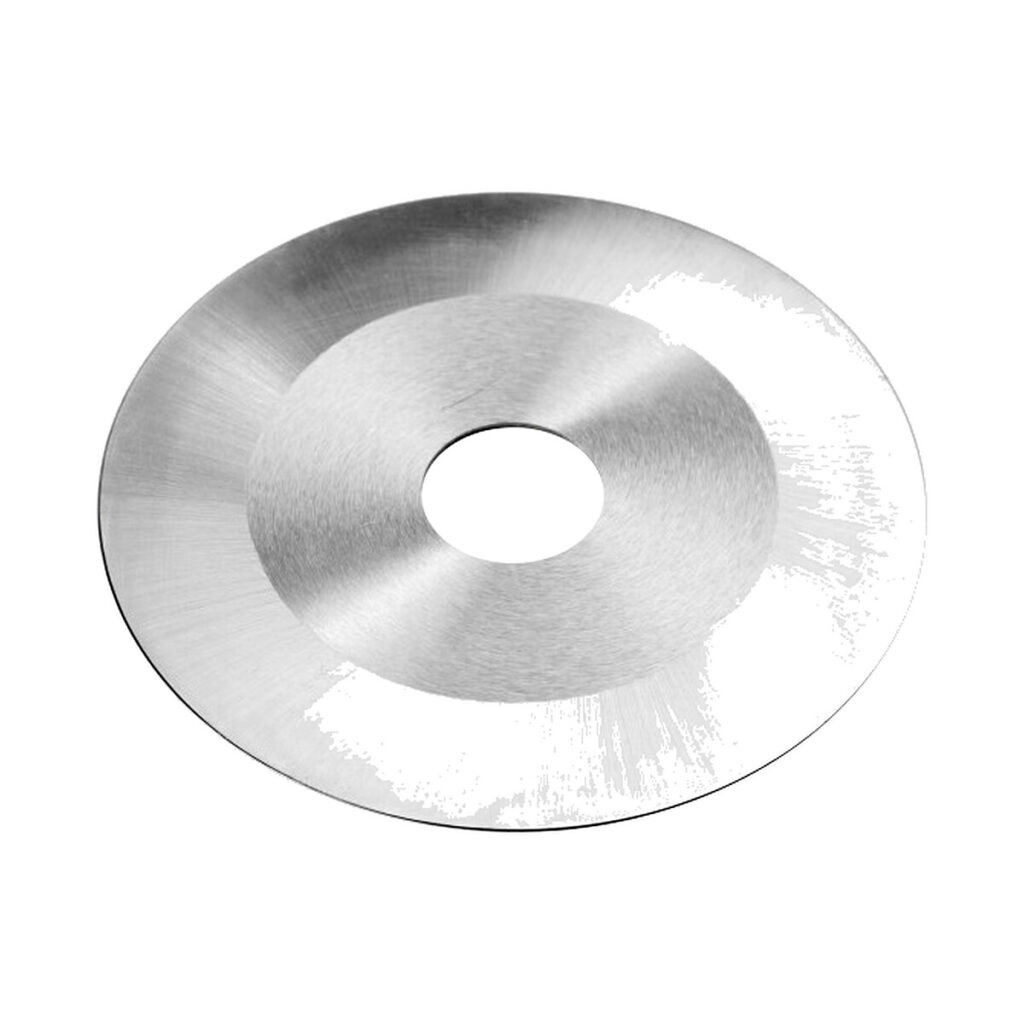
Industrial knives and spare parts
Browse the spare parts catalogue , the sharpening and repair services or request technical advice with the machine brand, model, part reference, dimensions and photographs.