The quality of the pellets depends on several stages of the process. MAAG describes M²-USG within its strand pelletizing systems, with monitoring functions and a cutting head design that should be studied according to the application.
Put technology in its context
MAAG documentation presents cutting space monitoring and characteristics of the head and its tools. Its context of use includes large-scale polymer production. It should not be presented as a direct replacement for any pelletizer on a recycling line.
Observe what changes in the pellets
Record length, uniformity and visible defects along with flow and condition of the strands. A quality change can be related to feeding, cooling or cutting. Before attributing it to a blade, examine the entire process and available data.
Consult a spare part with reliable information
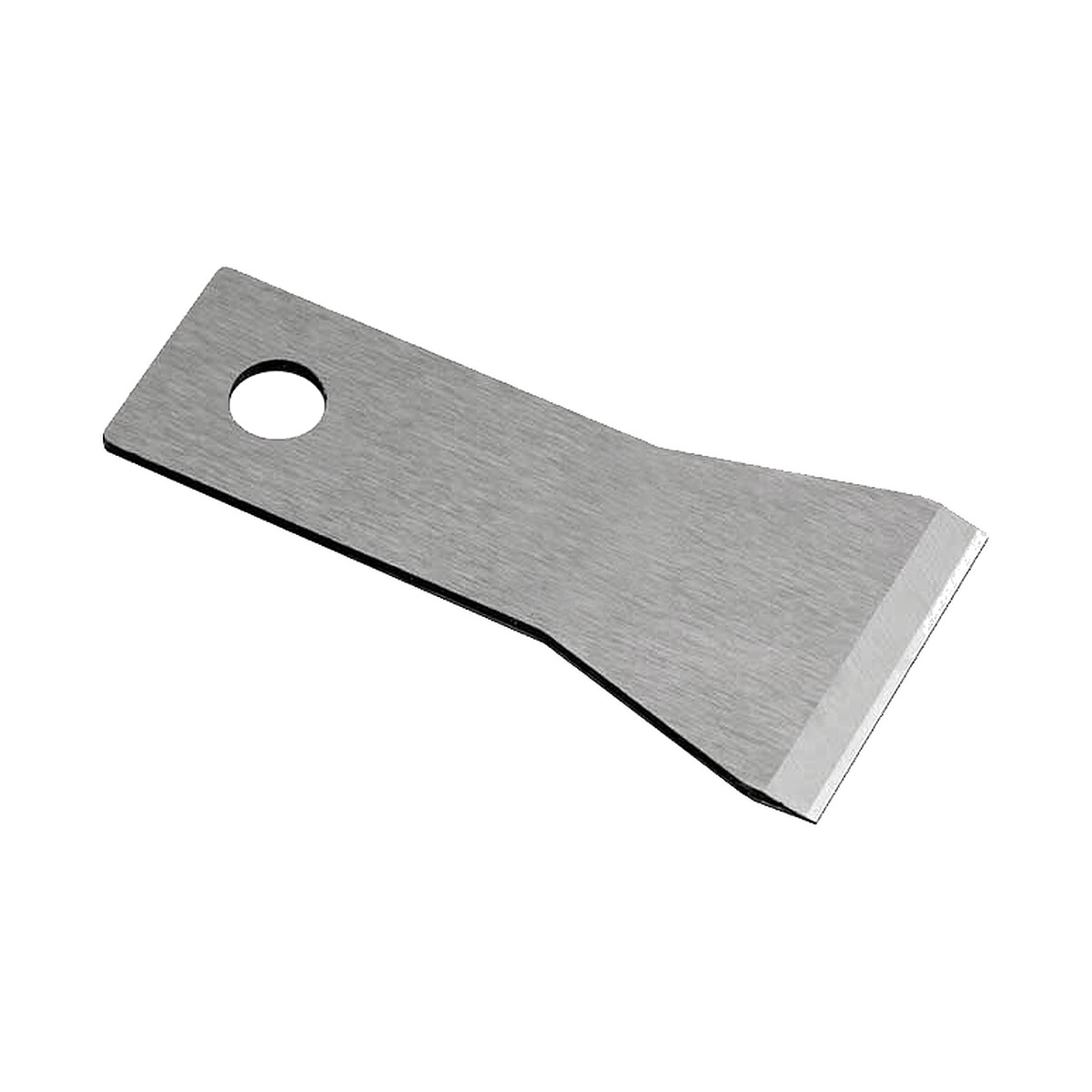
Provide model, head version, reference and drawing of the tool. Distinguish cutting parts from other system components. A geometry modification must be technically evaluated before mounting. The photo shows NGR pelletizing blades from the Sharp catalog as a generic example; does not represent MAAG M²-USG tools nor does it imply compatibility.
Frequently asked question
Do all pelletizers use the same cutting principle?
No. There are strand systems and other methods with different tooling and process requirements.
Technical documentation
MAAG: M²-USG. Consult your equipment’s specific documentation for maintenance procedures.
Consult blades and industrial spare parts
Check out our spare parts for industrial machinery and the options sharpening and repair. Send us brand, model, reference, measurements and photographs to study the piece and prepare your budget.